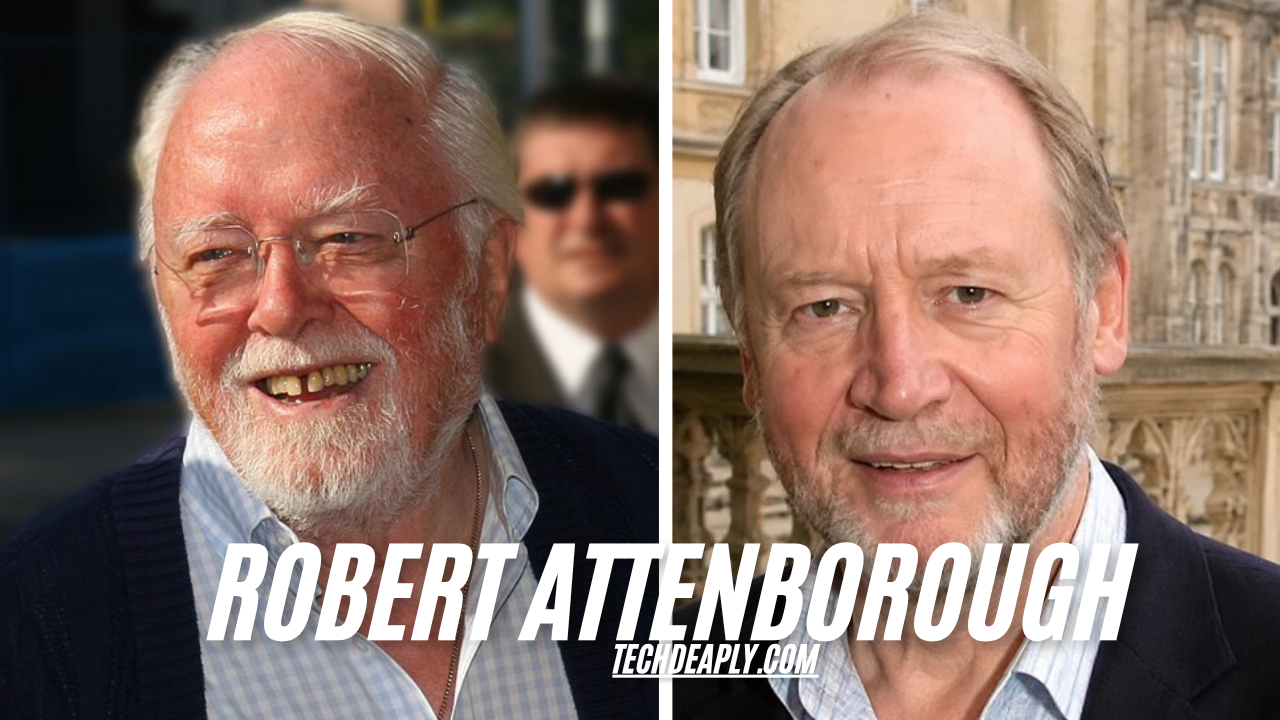
Robert Attenborough is a figure who remains largely out of the public eye but has made a notable mark in academia. While his father, Sir David Attenborough, is celebrated worldwide for his nature documentaries and broadcasting career, Robert has built a professional life dedicated to research, teaching, and human biology. Known primarily as a scholar, he has cultivated a career in biological anthropology, human population studies, and health research, distinguishing himself from the fame of his family with a life devoted to science and education.
Early Life and Family Background
Robert Attenborough was born to Sir David Attenborough and Jane Elizabeth Ebsworth Oriel. He is the elder of their two children, his sister being Susan Attenborough. Unlike his father, Robert’s upbringing was away from public scrutiny, and he has maintained a private personal life throughout. His early years were shaped by the presence of a father often traveling for filming and naturalist projects, which meant that family life had its unique rhythm. Despite the fame surrounding his father, Robert grew up pursuing intellectual curiosity rather than public recognition.
Choosing the Academic Path
While the media spotlight fell on his father, Robert chose academia as his life’s work. His focus has been human population biology, health, and evolutionary anthropology. He has held positions at prestigious institutions such as the University of Cambridge and the Australian National University. At Cambridge, he has served as a Senior Fellow at the McDonald Institute for Archaeological Research, contributing to studies in human evolutionary and behavioural ecology. At ANU, he worked as a senior lecturer, mentoring students and conducting research on human health, nutrition, and demography.
This choice reflects a deliberate path. Unlike his father, whose work communicates to millions, Robert’s contributions target specialized scholarly communities. His work often involves analyzing human variation, population dynamics, and biological responses to environmental factors, particularly in regions like Papua New Guinea. This combination of teaching, research, and publication has built a career that emphasizes substance and depth over public recognition.
Contributions to Research
Robert Attenborough’s research focuses on how human populations adapt biologically and socially to environmental and cultural challenges. By studying health patterns, nutrition, and population biology, he contributes to a greater understanding of how humans survive and evolve in diverse environments. His collaborations often intersect with studies on genetics, anthropology, and ecological adaptation.
One aspect of his work has been to document and analyze human variation in Oceania and the Pacific, exploring how different communities maintain health and resilience in diverse ecological settings. These studies provide valuable insights for both anthropologists and public health researchers. While his research is highly specialized, it has practical implications for understanding human development and population trends globally.
Academic Impact
Though not a public figure, Robert Attenborough has influenced his field significantly. He has guided students, published in peer-reviewed journals, and contributed chapters to scholarly books, all emphasizing human biology and population studies. His work reflects careful data-driven research, a hallmark of scientific rigor that complements his father’s approach to exploring the natural world, though in a very different domain.
Students and colleagues describe him as meticulous, thoughtful, and deeply committed to understanding the mechanisms behind human health and survival. His career trajectory demonstrates that impactful work does not require media attention, and his influence continues quietly through the training of new generations of anthropologists and researchers.
Life Outside Public Recognition
Robert Attenborough’s choice to avoid the spotlight mirrors that of many children of famous figures who seek meaningful work in private arenas. He maintains his privacy, rarely appearing in public interviews or media coverage. This discretion has allowed him to focus on research, teaching, and mentoring without distraction, which is unusual in a family as publicly prominent as the Attenboroughs.
Despite the quiet nature of his life, Robert’s achievements show the value of commitment to scholarship. In a world captivated by celebrity, he demonstrates that influence and contribution can exist quietly in classrooms, research labs, and field studies.
Balancing Legacy and Individuality
Being Sir David Attenborough’s son could have imposed expectations or pressures to follow in the broadcasting footsteps. Robert’s career shows that he has successfully created a separate legacy, grounded in evidence, teaching, and academic inquiry. His work is respected in professional circles and has contributed meaningfully to human biological studies without relying on public attention.
His story reflects a broader lesson: personal fulfillment and societal contribution are not measured by fame alone. By dedicating his career to education, research, and mentorship, Robert Attenborough has crafted a legacy that complements but does not compete with his father’s global renown.
Frequently Asked Questions
Who is Robert Attenborough?
Robert Attenborough is a British academic and biological anthropologist, known for his research in human population biology and health, particularly in Oceania and Papua New Guinea.
Is Robert Attenborough Sir David Attenborough’s son?
Yes, he is the elder son of Sir David Attenborough and Jane Elizabeth Ebsworth Oriel.
What does Robert Attenborough research?
His research focuses on human population biology, evolutionary anthropology, health, nutrition, and demographic studies.
Where has Robert Attenborough worked?
He has held positions at the University of Cambridge as a Senior Fellow and at the Australian National University as a senior lecturer.
Why isn’t Robert Attenborough famous like his father?
He has chosen a private academic career, focusing on teaching and research rather than public media exposure.
What impact has Robert Attenborough had?
Through his teaching, publications, and research, he has influenced students and contributed to the scientific understanding of human populations and health.
Conclusion
Robert Attenborough exemplifies a life devoted to scholarship and quiet influence. While not a public figure, his work in biological anthropology and human population studies has contributed significantly to understanding human health and adaptation. By carving a career distinct from his father’s media legacy, he demonstrates the value of dedication, intellectual curiosity, and service to knowledge. His story reminds us that meaningful achievement often thrives out of the spotlight, and impact is measured in insight, mentorship, and evidence-based contributions.