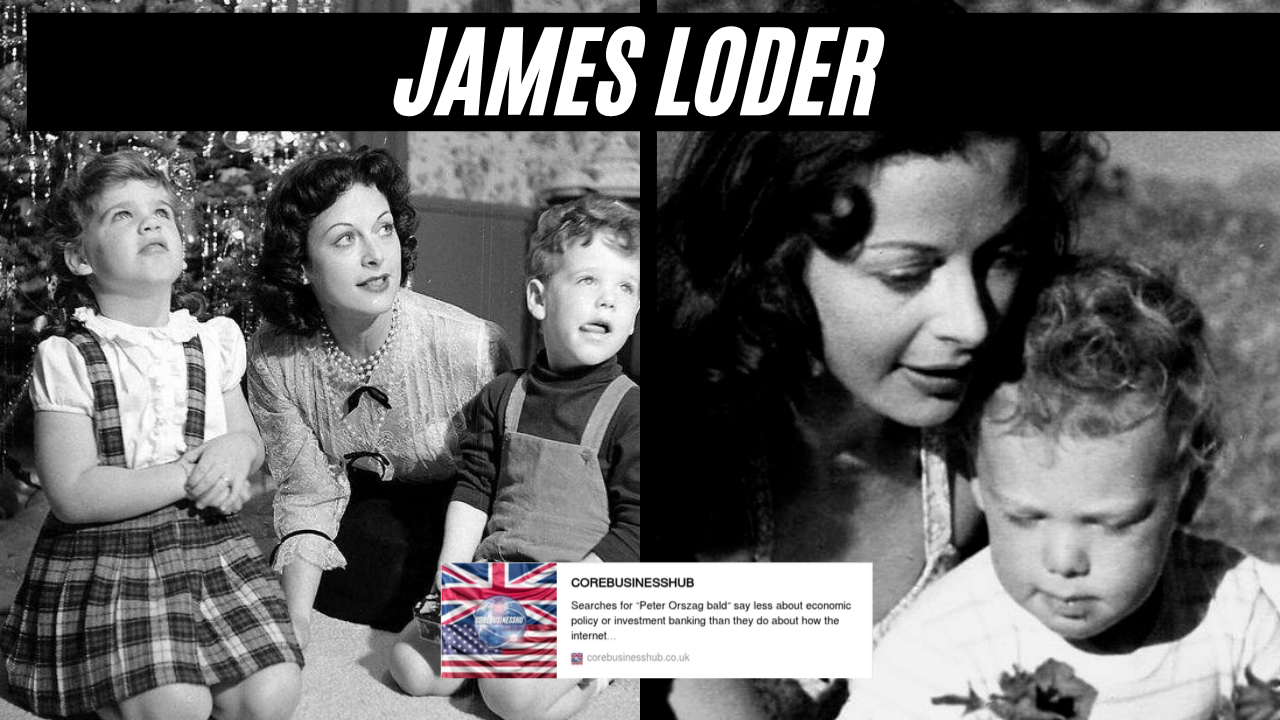
James Lamarr Loder lived much of his life outside the public eye, yet his story remains connected to two significant chapters of American history. He was raised as the eldest son of Hollywood actress and inventor Hedy Lamarr, one of the most fascinating figures of the twentieth century. Later, as a police officer in Omaha, Nebraska, he became involved in an incident that sparked public outrage and left a lasting mark on the city’s history.
Unlike his famous mother, James Loder never pursued a career in entertainment. His life followed a very different path shaped by military service, family estrangement, and professional responsibilities in law enforcement. Although many details about his early years remain disputed, the major events of his life have been documented through court records, historical accounts, and family reports.
Early Life and Family Background
James Lamarr Loder was born on March 6, 1938. He was raised by Hedy Lamarr, the Austrian-born actress celebrated for films such as Algiers, Samson and Delilah, and Ziegfeld Girl. Beyond her acting career, Lamarr later gained recognition for co-developing a frequency-hopping communication system that contributed to modern wireless technology.
Questions surrounding James Loder’s biological parentage have remained unresolved for decades. Hedy Lamarr initially described him as an adopted child during her marriage to screenwriter Gene Markey. Later, James himself claimed that he was Lamarr’s biological son. Subsequent reports linked to documentary research suggested that DNA testing did not establish a biological relationship between James and either Lamarr or actor John Loder.
Despite these uncertainties, James was raised as Lamarr’s eldest son. His childhood unfolded against the backdrop of Hollywood fame, where private family matters often attracted public curiosity.
Estrangement from Hedy Lamarr
One of the defining aspects of James Loder’s life was his fractured relationship with Hedy Lamarr. According to later accounts, the separation began when he was around twelve years old. He eventually left Lamarr’s household and was raised by another family.
The exact reasons for the estrangement have never been fully established. Different sources have offered varying explanations, but no definitive account exists. What remains clear is that mother and son spent decades apart.
Their relationship did not significantly improve over time. When Hedy Lamarr died in 2000, James had been excluded from her will. He later challenged the estate in court, bringing renewed attention to their complicated family history.
Military Service and Career
Before entering law enforcement, James Loder served in the United States Air Force. Reports indicate that he spent approximately eight years in military service. Although few details of his military career have been publicly documented, this period represented an important stage in his adult life.
After leaving the Air Force, Loder joined the Omaha Police Department in Nebraska. During the late 1960s, Omaha was experiencing racial tensions similar to those affecting many American cities. Concerns regarding inequality, policing practices, and civil rights had become increasingly prominent.
It was within this environment that James Loder became involved in the event for which he is most widely remembered.
The Death of Vivian Strong
On June 24, 1969, Omaha police officers responded to reports involving young people entering a vacant apartment at the Logan Fontenelle housing project. Officers James Loder and James Smith arrived at the scene.
As several individuals attempted to flee, Loder discharged his weapon. Fourteen-year-old Vivian Strong was struck in the back of the head and died from her injuries.
The circumstances surrounding the shooting became the subject of intense public debate. Witnesses provided differing accounts of whether any warning had been given before the shot was fired. Loder maintained that he had instructed the youths to stop.
The incident immediately sparked protests throughout Omaha. For many residents, Vivian Strong’s death represented broader concerns regarding racial injustice and police accountability. The unrest that followed became one of the most significant episodes in the city’s modern history.
Manslaughter Trial and Acquittal
Following public pressure and legal review, James Loder was charged with manslaughter. The case attracted widespread local attention and highlighted deep divisions within the community.
Prosecutors argued that the use of deadly force was unjustified. The defense maintained that Loder believed he was carrying out his duties as a police officer under challenging circumstances.
After trial proceedings concluded in 1970, an all-white jury acquitted Loder of the charges. The verdict generated further criticism and intensified frustration among many Omaha residents.
Even decades later, the case continues to be examined by historians and civil rights scholars studying the relationship between race, policing, and the justice system in the United States.
Estate Dispute and Later Years
James Loder returned briefly to public attention following Hedy Lamarr’s death in January 2000. Because Lamarr had excluded him from her will, he contested the estate through legal channels.
The dispute was eventually resolved through a settlement. Reports indicated that Loder received a payment of approximately $50,000. The case once again raised questions about the family’s long-standing estrangement and the unresolved issues surrounding his place within Lamarr’s family history.
Outside these legal proceedings, Loder largely remained out of the public spotlight during his later years.
Death and Legacy
James Lamarr Loder died on May 25, 2022, in Omaha, Nebraska, at the age of eighty-four.
His legacy remains complicated. To some, he is remembered primarily as Hedy Lamarr’s estranged son. Others associate his name with the 1969 death of Vivian Strong and its impact on Omaha’s civil rights history.
Neither perspective tells the complete story. Loder was also a military veteran and a man whose life intersected with major social issues of his era. His experiences reflected broader themes involving family relationships, public accountability, and the lasting consequences of historical events.
Understanding James Loder requires acknowledging both the uncertainties and the documented facts that shaped his life. His story offers insight not only into one family’s struggles but also into larger conversations that continue to influence American society today.
Frequently Asked Questions
Who was James Lamarr Loder?
James Lamarr Loder was the eldest son raised by actress and inventor Hedy Lamarr. He later served in the United States Air Force and worked as a police officer in Omaha, Nebraska.
Was James Loder Hedy Lamarr’s biological son?
The question remains unresolved. Lamarr initially described him as adopted, while later reports raised the possibility that he was her biological child. Documentary research later suggested that DNA testing did not confirm a biological relationship.
Why was James Loder estranged from Hedy Lamarr?
Reports indicate that James left Lamarr’s household when he was around twelve years old. The specific reasons behind the estrangement have never been fully established.
What happened to Vivian Strong?
Vivian Strong, a fourteen-year-old girl from Omaha, was fatally shot by Officer James Loder on June 24, 1969. The incident sparked protests and civil unrest within the city.
Was James Loder convicted for Vivian Strong’s death?
No. Loder was charged with manslaughter and stood trial, but he was acquitted by a jury in 1970.
Did James Loder inherit Hedy Lamarr’s estate?
Although he was excluded from Lamarr’s will, he challenged the estate in court. The matter ended with a financial settlement.
When did James Loder die?
James Lamarr Loder died on May 25, 2022, in Omaha, Nebraska. He was eighty-four years old.